Christmas Wreath Dark Background: A Designer's Review
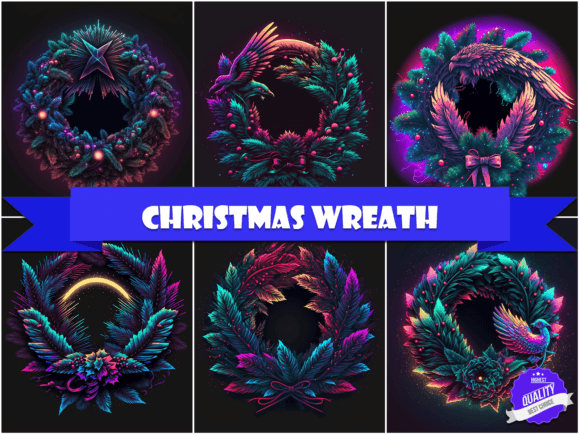
As a designer who spends more time staring at stitch simulations than most people care to admit, I approach every new machine embroidery design with a mix of excitement and skepticism. When I first loaded the Christmas Wreath Dark Background onto my screen, my immediate reaction was one of appreciation for its mood. In the world of Illustrations adapted for thread, capturing atmosphere is often harder than capturing shape. This design leans heavily into a classic, slightly moody holiday aesthetic that feels less like a cartoon and more like a boutique greeting card come to life.
The visual personality here is distinct. It isn't trying to be the brightest object in the room; instead, it relies on contrast and depth. For those of us running a craft business or selling on Etsy, this is crucial. Customers are increasingly looking for handmade products that feel sophisticated rather than childish. The layout suggests a traditional circular form, likely packed with greenery, berries, and perhaps a ribbon accent, all set against a backdrop that implies darkness without necessarily requiring you to stitch a solid black field everywhere. This nuance is what separates a decent embroidery file from a great one.
Real-World Application: The Holiday Tote Scenario
To truly evaluate this design, I imagined a specific real-life scenario: preparing a run of custom tote bag designs for a local boutique's holiday launch. The client wanted something that looked premium on canvas but wouldn't get lost in the weave of the fabric. This is where Christmas Wreath Dark Background shines. If you were to stitch this on a natural or cream-colored canvas tote, the "dark background" elements of the design would need to be handled carefully. Depending on how the digitizer treated those dark areas, you might be looking at significant fill stitch coverage.
In this context, the design acts as a statement piece. Unlike a small logo tucked in the corner, a wreath commands attention. For a personalized gift or a small shop product, this level of detail signals quality. However, if you are planning to use this for sweatshirt embroidery on a charcoal or navy garment, the design's inherent darkness could blend too much if the thread colors aren't vibrant enough. I would recommend testing this on a light fabric first to see how the shadow effects play out, ensuring the wreath pops rather than disappears into the garment.
Navigating Fabric Textures and Stitch Density
One of the biggest challenges with any design labeled as having a "dark background" is stitch density. Heavy density can make a finished product stiff and uncomfortable, especially on wearable items like custom apparel or baby embroidery projects. Before committing to a production run, you must check the stitch count and density settings in your software. If this design uses dense satin columns to create the illusion of depth in the foliage, it will look luxurious on a sturdy towel or pillow cover but might pucker on a thin t-shirt.
Textured fabrics present another variable. If you are stitching this on a waffle-knit tea towel or a fuzzy fleece blanket, the fine details of the running stitch outlines might get lost. The "dark background" aspect might actually work in your favor here by providing a solid base that anchors the lighter elements of the wreath. However, on stretchy fabrics, you need to be vigilant about using the right stabilizer. A design with this much visual weight requires a cut-away stabilizer to prevent distortion after washing, ensuring your holiday embroidery looks crisp months later.
Commercial Viability and Brand Consistency
For Etsy sellers and creative entrepreneurs, the value of a design lies not just in how it looks, but in how it sells. The Christmas Wreath Dark Background fits perfectly into the current trend of "moody farmhouse" or "classic traditional" decor. It has high giftability. Imagine this stitched onto an apron for a baking enthusiast or a patch for a denim jacket. The professional finish it offers can boost customer trust and brand recognition.
However, versatility is key. While it excels as a central motif on a pillow cover or a wall hanging, consider its scalability. Can it be reduced for a hat without losing the definition of the berries or leaves? Small hoop sizes can be tricky with detailed Illustrations. If the design relies on tiny text or intricate layering, shrinking it for a cap or a pocket logo might turn those details into a muddy blob. Always review the minimum recommended size before offering it as an add-on for smaller items.
Practical Notes for the Serious Embroiderer
Before you start stitching client orders, here are a few practical steps I always take with a new digital embroidery file:
- Test on Scrap First: Never skip this. Stitch the design on the exact fabric you plan to sell. See how the "dark" areas render; do they look like shadows or just heavy thread?
- Check Thread Contrast: Ensure your thread colors provide enough separation between the wreath and the background elements. You may need to tweak the color chart to suit specific fabric shades.
- Review Stitch Direction: Look at how the satin stitch angles flow around the curve of the wreath. Poor directionality can ruin the 3D effect.
- Mockup Verification: Create both color and black-and-white mockups. Sometimes a design relies too heavily on color contrast and fails in monochrome, which limits its use on certain promotional items.
- Licensing Check: Since this falls under commercial embroidery potential, confirm the license terms. Are you allowed to sell the physical finished product? Can you use it in printable mockups for your website? Always clarify before listing items.
Ultimately, Christmas Wreath Dark Background is a strong contender for anyone looking to elevate their holiday collection. It moves away from the generic and offers a sense of depth that appeals to buyers seeking quality. Whether you are making a single personalized gift for a neighbor or stocking inventory for a winter craft fair, this design has the potential to perform well—provided you respect the technical requirements of the stitchout. Treat it with the preparation it deserves, and it will reward you with a stunning centerpiece for your next embroidery project.